Butter Croissants From Scratch
Highlighted under: Baked Meals
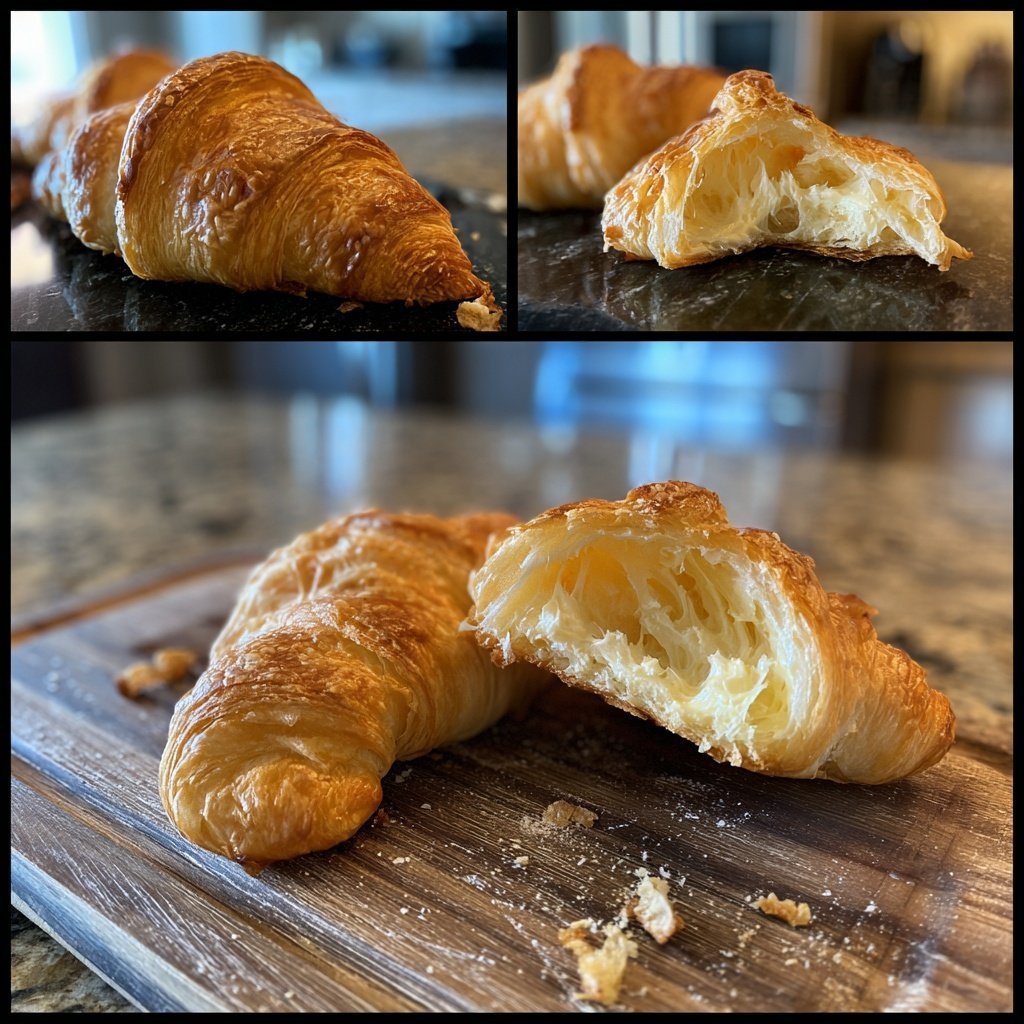
I absolutely love making butter croissants from scratch! There's something magical about transforming simple ingredients into flaky, buttery pastries that fill your kitchen with a delightful aroma. As I knead the dough and let it rise, anticipation builds for that moment when I finally pull the golden-brown croissants from the oven. These croissants serve as the perfect breakfast treat or snack, and once you try this method, you'll find it hard to go back to store-bought ones. Let's dive into this rewarding baking adventure together!
When I first attempted to make croissants, I was amazed at the artistry involved in creating the layers. The key to success lies in the lamination process, which involves folding and rolling the dough with cold butter multiple times. This method creates those signature flaky layers. My first batch was a bit uneven, but after refining my technique, I found that resting the dough at intervals helped develop the flavor and texture beautifully.
One of my favorite tips is to ensure your butter is cold yet pliable when you incorporate it into the dough. If it’s too firm, it will break instead of blending smoothly, while overly soft butter will melt into the dough rather than stay in those heavenly layers. With practice, you’ll gain confidence, and the rewards are absolutely worth the effort!
Why You Will Love This Recipe
- Flaky and buttery texture that bursts with flavor
- Baking fills your home with a warm, inviting aroma
- One batch yields enough croissants for family or friends
Understanding the Lamination Process
Laminating the dough is one of the most critical steps to achieving those flaky layers in your croissants. This technique involves rolling and folding the dough around the butter to create many thin layers. Make sure your butter is cold and pliable but not too soft, as this will prevent it from seeping out during the rolling process. If your butter begins to melt while rolling, chill the dough for 10-15 minutes to maintain the right consistency for optimal lamination.
After each fold, ensure that the dough is rolled out on a lightly floured surface to prevent sticking and to help maintain even layers. A rolling pin with a smooth surface is ideal. A common mistake is not rolling the dough large enough. Aim for a rectangle that's approximately six times longer than it is wide for each fold to create enough layers for a proper rise.
Choosing the Right Ingredients
The quality of your ingredients directly affects the final product, especially with croissants. Use high-protein all-purpose flour or bread flour, as it provides the necessary structure and elasticity to hold those delicate layers. If you prefer a richer flavor, consider substituting a portion of the milk with heavy cream. This not only enhances taste but also contributes to a softer crumb.
Opt for European-style butter with a higher fat content for the butter layer. This will yield a richer flavor and contribute to that desirable flaky texture. If you're in a pinch, you can use regular unsalted butter but try to chill it thoroughly before laminating to maintain stability during the rolling process.
Serving and Storing Your Croissants
Once baked, allow the croissants to cool slightly on a wire rack before serving. This lets them firm up a little, enhancing their texture. Croissants are best enjoyed fresh, but if you have leftovers, they can be stored in an airtight container at room temperature for up to two days. Reheat in a preheated oven at 350°F (175°C) for 5-7 minutes to restore their flakiness.
If you want to make ahead, consider freezing the shaped but unbaked croissants. Place them on a baking sheet to freeze until solid, then transfer to a freezer bag. When you’re ready to bake, simply let them thaw and rise for a few hours before baking as directed. This makes it possible to enjoy fresh croissants at a moment's notice without the full commitment of time each time you want to indulge.
Ingredients
Gather these ingredients to get started:
Dough
- 4 cups all-purpose flour
- 1/4 cup granulated sugar
- 2 teaspoons salt
- 1 tablespoon active dry yeast
- 1 1/2 cups whole milk, warm
- 1/4 cup unsalted butter, melted
Butter Layer
- 1 cup cold unsalted butter
Egg Wash
- 1 large egg
- 1 tablespoon water
Make sure to measure your ingredients accurately for the best results!
Instructions
Prepare the Dough
In a large bowl, mix the warm milk with the yeast and let it sit for about 5 minutes until frothy. Combine the flour, sugar, and salt in a separate bowl. Gradually mix in the yeast mixture and melted butter until a dough forms. Knead the dough for about 5-10 minutes until smooth, then place it in a greased bowl, cover, and let it rise for 1 hour.
Incorporate the Butter
While the dough is rising, prepare the butter layer. Place the cold butter between two sheets of parchment paper and use a rolling pin to flatten it into a rectangle about 1/2 inch thick. Refrigerate this butter slab until the dough has risen.
Laminating the Dough
After the dough has doubled in size, roll it out into a large rectangle on a lightly floured surface. Place the chilled butter slab in the center, folding the sides of the dough over the butter. Roll the dough out again into a larger rectangle, then fold it into thirds. Wrap in plastic and refrigerate for 30 minutes. Repeat this process two more times.
Shape the Croissants
After the final chilling, roll the dough into a long rectangle and cut it into triangles. Starting at the wide end, roll each triangle tightly towards the point to form the croissant shape. Place them on a baking sheet lined with parchment paper and let them rise for another 30 minutes.
Bake the Croissants
Preheat your oven to 400°F (200°C) while the croissants rise. In a small bowl, whisk together the egg and water to create an egg wash, then brush it over the croissants. Bake for 20-25 minutes or until they are golden brown. Let cool slightly before serving.
Enjoy your freshly baked croissants warm with butter or your favorite jam!
Pro Tips
- For an extra touch, experiment with fillings like chocolate or almond paste for variety.
Troubleshooting Common Issues
It's important to watch your dough during its rise for optimal fluffiness. If the dough isn't rising, make sure your yeast is active. You can check this by mixing it with warm water and sugar; it should become frothy within minutes. If your croissants turn out dense or heavy, it could be due to overworking the dough or not allowing it to rise adequately.
Also, if you notice your croissants don't have the desired flaky texture, check that your butter was cold enough during lamination. If it melted into the dough, it wouldn’t create those signature layers. Keep extra butter in the fridge while you work to maintain a cold environment.
Variations to Experiment With
Once you've mastered the classic butter croissant, you can customize or enhance them with various flavors. Try adding a sprinkle of cinnamon to the dough mixture for a subtle spice, or incorporate finely chopped herbs like rosemary or thyme into the butter for a savory twist. Another option is to fill your croissants with chocolate or almond paste for a deliciously sweet variation.
For a more indulgent touch, glaze your golden-brown croissants with a simple icing made of powdered sugar and milk. This adds a sweet finish that can elevate your breakfast table or dessert spread. Each of these variations can add a unique touch to your basic recipe, making it fun to explore different flavor profiles.
Questions About Recipes
→ Can I make the dough in advance?
Yes! You can prepare the dough and refrigerate it for up to a day before rolling and shaping the croissants.
→ Why is my dough not rising?
Make sure your yeast is fresh and that your warm milk isn't too hot, as high temperatures can kill the yeast.
→ Can I freeze the croissants?
Absolutely! Freeze the shaped croissants before baking for up to 2 months. To bake, let them thaw and rise before baking as directed.
→ What butter should I use for lamination?
Use high-quality, unsalted cold butter for the best results, as it offers better flavor and texture.

Butter Croissants From Scratch
Created by: Odette Fairbanks
Recipe Type: Baked Meals
Skill Level: Intermediate
Final Quantity: 12 croissants
What You'll Need
Dough
- 4 cups all-purpose flour
- 1/4 cup granulated sugar
- 2 teaspoons salt
- 1 tablespoon active dry yeast
- 1 1/2 cups whole milk, warm
- 1/4 cup unsalted butter, melted
Butter Layer
- 1 cup cold unsalted butter
Egg Wash
- 1 large egg
- 1 tablespoon water
How-To Steps
In a large bowl, mix the warm milk with the yeast and let it sit for about 5 minutes until frothy. Combine the flour, sugar, and salt in a separate bowl. Gradually mix in the yeast mixture and melted butter until a dough forms. Knead the dough for about 5-10 minutes until smooth, then place it in a greased bowl, cover, and let it rise for 1 hour.
While the dough is rising, prepare the butter layer. Place the cold butter between two sheets of parchment paper and use a rolling pin to flatten it into a rectangle about 1/2 inch thick. Refrigerate this butter slab until the dough has risen.
After the dough has doubled in size, roll it out into a large rectangle on a lightly floured surface. Place the chilled butter slab in the center, folding the sides of the dough over the butter. Roll the dough out again into a larger rectangle, then fold it into thirds. Wrap in plastic and refrigerate for 30 minutes. Repeat this process two more times.
After the final chilling, roll the dough into a long rectangle and cut it into triangles. Starting at the wide end, roll each triangle tightly towards the point to form the croissant shape. Place them on a baking sheet lined with parchment paper and let them rise for another 30 minutes.
Preheat your oven to 400°F (200°C) while the croissants rise. In a small bowl, whisk together the egg and water to create an egg wash, then brush it over the croissants. Bake for 20-25 minutes or until they are golden brown. Let cool slightly before serving.
Extra Tips
- For an extra touch, experiment with fillings like chocolate or almond paste for variety.
Nutritional Breakdown (Per Serving)
- Calories: 220 kcal
- Total Fat: 14g
- Saturated Fat: 9g
- Cholesterol: 55mg
- Sodium: 180mg
- Total Carbohydrates: 22g
- Dietary Fiber: 1g
- Sugars: 1g
- Protein: 5g